Uncategorized

All posts in the Uncategorized category

The Painter and the Wild Swans, by Claude Clement

Published May 12, 2014 by Dagmar

wildswansI was drawn to this book because of the illustrations by Frederic Clement.  They are beautiful.  I was delighted that the story is beautiful as well.

Teiji is a famous painter whose paintings are sought after by people far and wide.  One day, while he is painting, he sees a beautiful flock of birds fly by.  The birds are the most beautiful that he has ever seen.  So beautiful, in fact, that he cannot paint anymore.  He goes off in search of the birds.  He walks and walks until he finds an old man.  The old man tells him that the birds are wild swans who come from Siberia and spend the winter on an island in the middle of the lake.  The old man warns Teiji that it is dangerous to cross the lake in the winter, because of the ice.  Teiji says that he can’t paint unless he sees that real beauty again.  He feels such a strong need to see the birds that he sells everything he has, with the exception of his brushes and paints, and gives it to the old man for his boat.  Teiji takes the boat across the lake.  When the ice breaks the hull and the boat capsizes, Teiji is plunged into the icy water.  Freezing, but determined to see the beautiful birds again, he drags himself to the island.  There he sees the wild swans.  He realizes that true beauty is impossible to capture in a painting and is grateful that he has had the chance to see the birds before he dies.

My students were very quiet while I read this book.  I think they were taken in by the fact that Teiji would give away everything he had just to see the birds again.  Although adults reading the book understand that Teiji has died at the end of the book, not all students do. We often spend time discussing the ending as so few books end this way.  This is a thoughtful, beautiful book.

Interestingly, Claude Clement and Frederic Clement are not related.  Please note that both their last names should appear with l’accent aigu over the first “e”.
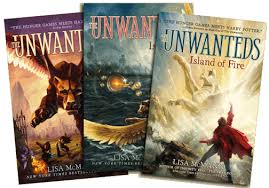
The Unwanteds, by Lisa McCann

Published May 10, 2014 by Dagmar

theunwantedsMy students really loved The Unwanteds.  In fact, 28 students of mine from 3rd-5th grade read this and two other books for the 2014 California Young Readers’ Medal, a Medal awarded to the book that receives the most votes in a category from students throughout the state.  The Unwanteds was the winner at our school and in the state.

When children in Quill turn 13, they wait to hear their judgement.  Will they be Wanted, Necessary or Unwanted?  Wanteds are the strongest in society and train to defend Quill from those outside.  Necessarys provide the services needed by Wanteds.  And the Unwanteds?  Each year, the Unwanteds of Quill disappeear forever.

Expecting to be put to death, the Unwanteds actually enter a magical world very different from the decrepit and bleak world of Quill.  Artime is a beautiful world full of color, where creativity is revered.  Magical spells and creatures keep Artime safe from those in Quill who would destroy it, but those magic spells are wearing thin.  Now, the residents of Artime must learn to use their talents to prepare for battle to save their world.

Will Artime survive?  Read and find out.  This series has captivated my students who are now reading the other two books in the series.  I couldn’t put the book down myself.


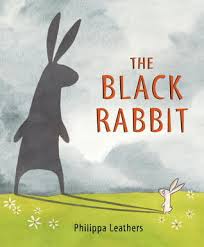
The Black Rabbit, by Philippa Leathers

Published May 8, 2014 by Dagmar

BlackRabbitHere’s a really fun read aloud.  I read this to students from our transitional kindergarten, kindergarten and first grade.  All of them LOVED this book.

Black Rabbit comes out of his burrow into the bright sunlight.  He sees a big black rabbit behind him and is very scared.  He runs from Black Rabbit, but Black Rabbit runs after him.  Rabbit hides behind a tree but when he comes out from behind the tree there is big Black Rabbit.  All my students yelled out, “It’s his shadow!”, but this book has a couple of great twists that kept them totally interested until the end.

My students all immediately said, “Read it again!”  Don’t miss this great book.  A Junior Library Guild selection.

Getting Ready: Summer Reading List 2014

Published May 2, 2014 by Dagmar

I’ve been asking my students which books are “must reads” for my summer reading list this year.  This is what my 3rd-7th grade students have been saying, plus some books I added to my list myself:

Middle School students have recommended:if I stay

  • Cherub, by Robert Muchamore (series)
  • Timeless, by Alexandra Monir
  • If I Stay, by Gayle Forman (series)
  • Anything!! by Sonya Sones (they added the !!)
  • The Fault in Our Stars, by John Green

My 3-5th grade students recommended:the unwanteds

  • A Nest for Celeste, by Henry Cole
  • The Unwanteds, by Lisa McCann (series)
  • Peter and the Star Catchers, by Dave Barry (series)
  • Lauren Myracle’s Ten, Eleven, Twelve, Thirteen, Thirteen+One (series)

Here are some books I hope to be able to recommend to students next school year:same sun here

  • Caminar, by Skila Brown (middle school)
  • Same Sun Here, by Silas House and Neela Vaswani (5th-7th grade)
  • The Boundless, by Kenneth Oppel (3rd-5th grade)
  • Dark Lord, by Jamie Lawrence (5th-8th grade) (series)


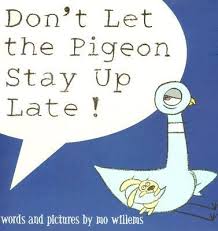
Don’t Let the Pigeon Stay Up Late, by Mo Willems

Published April 29, 2014 by Dagmar

Pigeon lateFor those of you who have never met Mo Willem’s pigeon, you’re in for a treat.

For those of you who know Mo Willem’s very naughty pigeon, it won’t surprise you that now he wants to stay up late.  In fact, he’ll say anything to be able to stay up late.  It’s up to you (and your students) to say “NO!”.

The book begins with a man who asks you to please do him a favor while he brushes his teeth.  “Please do NOT let the pigeon stay up late.”  Pigeon has other ideas.  This is your chance to live your dream of becoming a (very) naughty pigeon.  Kids love the role reversal of getting to tell you “No!” as you (the pigeon) give all the excuses they themselves would give to try to get you to let them stay up late.

This one had my students laughing out loud.  They loved it.  I hope you do too!

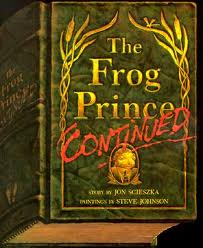
The Frog Prince continued, by Jon Scieszka

Published April 28, 2014 by Dagmar

frog princeThe beautiful princess kisses the frog.  The frog becomes a prince, and the prince and princess live happily ever after.  Right?  Well, unfortunately, in Jon Scieszka’s fractured fairy tale, the marriage is not one made in heaven.

The Princess is annoyed that the Prince keeps sticking out his tongue and hopping on the furniture. She wishes the Prince would just go out and slay a dragon.  The Prince, upset that the Princess won’t hang out at the pond with him, is miserable.

They need a change.  When the Princess says she wishes the Prince would just turn back into a frog, the Prince has an idea.  He leaves the castle in search of a witch who can turn him back into a frog.  He finds plenty of witches in the woods.  The first wants to cast a nasty spell on him so he won’t wake up Sleeping Beauty, the second wants to feed him a poison apple so he won’t bother Snow White, one invites him into her gingerbread house, the fourth turns him into a carriage.  He escapes from all four witches and sits, lonely, in the dark woods. The Prince realizes that he really belongs at home with the Princess who took a chance and kissed him when he was a frog.  So, the Prince goes home to his worried Princess and kisses her.  They both turn into frogs and live happily ever after.

This is a fun read aloud for older students who will love recognizing familiar fairy tales, Steve Johnson’s creative illustrations and Jon Scieszka’s funny re-imaginining of the Frog Prince.


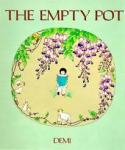
The Empty Pot, by Demi

Published April 26, 2014 by Dagmar

empty potMy older students really enjoyed this book.
The Chinese Emperor is looking for someone to succeed him as Emperor.  The Emperor launches a competition.  He provides all the children with seeds to grow.  The child who grows the most beautiful flowers from the seeds will become the new ruler of the empire.

Ping is a child who not only loves flowers but is able to grow beautiful flowers.  When he receives his seed, he plants it and cares for it every day.  Unfortunately, nothing grows.  Ping replants the seed in a new pot.  He changes the soil that the seed is planted in, and still nothing grows.  The children around him are all able to grow beautiful flowers.  When it is time for the children to present their flowers to the Emperor, they laugh at Ping and tell him that he can’t present an empty pot to the Emperor.  Ping’s father overhears the other children and tells Ping that it’s fine to present his best efforts to the Emperor.

On the day that the children present their pots, Ping approaches the Emperor with his empty pot.  The Emperor, much to everyone’s surprise, smiles.  Ping was the only child unable to grow the seed he was given by the Emperor.  Since the Emperor had boiled the seeds before he gave them to the children, not one of the seeds should have grown.  Ping was the only child who was honest about trying to grow only the seed he was given by the Emperor.  Because of his honesty, the Emperor crowns Ping the new Emperor.

My students loved this ending and couldn’t stop talking about how the other children were deceitful and how Ping’s honesty was rewarded.

I am Malala, by Malala Yousafzai and Christina Lamb

Published April 21, 2014 by Dagmar

malalaDespite being only 16 years old, Malala Yousafzai has won many prizes around the world for her activism in the fight for girls’ education and women’s rights before the Taliban’s attempt to silence her in October 2012.  Malala survived their attack and went on to win even more accolades, including Pakistan’s Youth Peace Prize, the Sakharov Prize, awarded for leadership in human rights and freedom of thought and a Nobel Peace Prize nomination in 2013.  Together with Christina Lamb, she wrote this memoir about her life, the history of the Swat Valley and her time living under the Taliban.

I have a student that patiently waited for me to buy this book and catalog it so that she could check it out.  She came to my library to return the book last week but said that she actually didn’t want to return it.  She wanted to just keep it, because she was moving to another town over spring break and wanted to keep reading the book.  She is a very sweet girl who has read every book with Muslim characters in my library.  I was really touched by the way she connected with the book.  It inspired me to delete it from our collection (I will replace it) and just give it to her.  She hugged the book and me. It was totally worth it.

Here is what she and I both saw in this book.

This book is as much a story of Malala’s fight for girl’s education as it is as a history of the Swat Valley, an introduction to her Pashtun culture, the story of how the Taliban entered and affected the Swat Valley and all of its inhabitants, and the conflict the Swat Valley’s residents felt about the Pakistan Army’s fight against the Taliban.  It’s a fascinating insider’s perspective into current events and an area of the world few in the United States have seen.

Malala is a straight A student, the daughter of her school’s founder.  She loves studying and treasures her school books.  From the outset of the book, you see that Malala will follow in her father’s footsteps as an activist.  Her father is an outspoken advocate for education, specifically girls’ education and bringing peace to the Swat Valley.  It is no surprise that we learn that Malala began anonymously writing a blog for the BBC about life under the Taliban when she was just 11.  She then begins speaking in public about her belief that girls should be educated and her insistence that the Pakistani government use some of the billions of dollars received in aid from the United States to rebuild schools destroyed by the Taliban.  All her public appearances as well as her father’s bring her to the attention of the Taliban.  Both Malala and her father receive death threats from the Taliban.  This only steels Malala to bravely continue her advocacy.

I was fascinated by this book as was my student.  The pictures in the book help the reader connect with Malala on a more personal level.  I would recommend this to middle and high school readers.


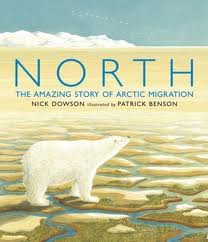
North: The Amazing Story of Arctic Migration by Nick Dowson

Published April 19, 2014 by Dagmar

northNorth is a beautiful book describing seasonal changes in the Arctic and Arctic migration.

North begins with winter in the Arctic and its year-round residents, the polar bear and arctic fox.  When spring arrives, algae blooms, plants grow and the tundra turns green.  Animals and birds begin their migration to the Arctic, beginning with the gray whale, terns, bar-tailed godwits, snow geese, white cranes,  caribou, walrus, narwhal whales and more.  The text describes each creature’s journey, including what they eat as they travel.  By May, the ice sheets are cracking, opening new sea lanes for the migrating animals.  In summer the Arctic is lush flowers and grass, feeding the many animals that are now living in the Arctc.  When September arrives, the animals and birds begin to prepare for their journey south again.

It’s a wonderful way to introduce students to migration.  I read it to my 3rd grade students who really enjoyed the book.

The Giver, by Lois Lowry

Published April 12, 2014 by Dagmar

giverThe Giver, is a book that has stayed with me since I first read it years ago.  It made an equally big impact on my son when I read it to him.  The Giver won the 1994 Newbery Medal.

I read aloud to my sixth graders each week and decided to read them The Giver. I wondered what our students would make of the society Lois Lowry created.  In the Giver, Jonas is a boy living in a society that protects its people from all pain, horror, sadness and loneliness, but also doesn’t allow them to feel happiness, love or excitement.  Everyone exists in a comfortable, unchanging environment. There is one person, however, who is able to feel everything.  His name is the Giver, and he serves the community by holding all of its memories for them, both painful and joyful.  He alone knows the history of the community before it changed to protect its citizens.  When issues arise in the community, the Giver is called upon for advice on how to address the issue, using his knowledge of the past.

Jonas, as a 12 year old, is ready to receive his life’s assignment in the community.  Some children are assigned to care for the elderly, some become lawyers or teachers. Jonas receives the most prestigious job of all, Receiver.  Every day, Jonas goes to meet with The Giver, to receive the memories of the community.  He learns about war, sickness and disappointment but also about colors, the warmth of sunshine, the cold of snow and the excitement of riding a sled.  He is told that he cannot speak of his experiences with everyone.  He soon feels isolated from his former life and his community.

Jonas’ father is a Nurturer.  His job is to care for infants and toddlers before they are assigned to their family units.  Jonas’ father is troubled by a baby, Newchild 36, who doesn’t seem to be able to fit in.  The baby cries at night and is not adjusting to his environment as the other children are.  As a result, 36 is not able to be assigned to a family unit.  Jonas’ father convinces his bosses to let him bring the child home at night, thinking that it might help him.  Although they are only supposed to know the child’s birth number, Jonas’ family learn that the child’s name is Gabriel.  Despite all Jonas’ family’s efforts, Gabriel doesn’t improve.  Jonas’ father informs Jonas that Gabriel will be “released”.  When he discovers what will happen to Gabriel, Jonas makes a fateful decision that will change not only his own destiny, but the destiny of his community.

This book is perfect for tweens and middle school readers.  My students loved the book and many went on to read the entire Giver series.  The entire series, in order: The Giver, Gathering Blue, The Messenger, and Son, published in 2012.

In case you’re interested in sharing this book with students, here is a link to Lois Lowry’s interview, on Scholastic.com, answering questions submitted by students about The Giver.

http://www.scholastic.com/teachers/article/lois-lowry-interview-transcript

Here’s another link I found that with interesting discussion questions:

http://www.google.com/url?sa=t&rct=j&q=&esrc=s&source=web&cd=2&ved=0CDUQFjAB&url=http%3A%2F%2Fwww.christina.k12.de.us%2FLiteracyLinks%2F2008%2520Units%2FUnit%25208_Appendix%2520E_Journal%2520Topics_The%2520Giver.doc&ei=RxiqUoKYDs32oASJ34CgAg&usg=AFQjCNFxHhCFTB3wSAsxRnOg_FeCcGDhbQ&bvm=bv.57967247,d.cGU