Happy 4th of July! Summer is my favorite time to hunker down with my books, and I’ve read three more books from my summer reading list. You can see the reviews of the first three summer reading list books I read, here. My hope is to find great books to recommend to my tween and middle school students next school year. I’m happy to say that I found one book that I absolutely love, one that I liked, and one that I know I should like but feel lukewarm about. Let’s start with the good news.
 The book I absolutely loved and just know will fly off my shelves is the sequel to One Crazy Summer, P.S. Be Eleven. I think it’s best to first read One Crazy Summer (click the link to see my blog post). Briefly, in One Crazy Summer, Rita Williams-Garcia tells the story of Delphine, Vonetta and Fern. These three young girls leave Brooklyn, where they live with their Pa and grandmother, Big Mama to fly to Oakland, CA, to meet the mother that abandoned them. Their mother, Cecile, is unapologetic about leaving her children to become a poet in CA. Life in Cecile’s neighborhood in North Oakland means learning and living with members of the Black Panthers, something very foreign to the girls’ family in Brooklyn. (My public school is located just blocks from where One Crazy Summer takes place in Oakland.) The girls, who have always taught not to make a spectacle of themselves, learn the words “oppression”, “revolution” and “Black Power”. I didn’t know what to expect from P.S. Be Eleven, but I was so pleased that it picked up right at the end of One Crazy Summer. In P.S. Eleven, the girls continue their relationship with Cecile by writing to her often. But, in this book, you enter their lives with Pa, Big Mama, their uncle Darnell, fighting in the Vietnam War, the sensation of the Jackson Five, and the girls’ new stepmom. I love the way the three sisters interact, and I had to smile every time they said “Power to the People”. I also love getting to know Delphine and her family a little more. This book is excellent – just as good as One Crazy Summer, but different. In One Crazy Summer, you admire Delphine’s strong, independent and reliable nature. In P.S. Be Eleven, you wish that she didn’t have to be quite so strong and reliable, and you root for Cecile as she tries to convince Delphine to just “Be Eleven”. While I think I got even more out of this book, because I lived at this time, I think kids will get a valuable glimpse into the late 60s and early 70s. I can’t wait to recommend this to my students. My son, who loved One Crazy Summer, has already declared that he plans to read it.
 I am a big fan of Steve Sheinkin’s books. Although I haven’t written about it yet, I loved his book, The Notorious Benedict Arnold, as well as his award-winning book, Bomb: The Race to Build – and steal – the Most Dangerous Weapon in the World. Lincoln’s Grave Robbers was a good book, but it wasn’t great. It tells the story of a fantastic plot by counterfeiters in the 1870s to steal Abraham Lincoln’s body and ransom it. The book begins with various stories of counterfeiters and the birth of the United States Secret Service, the organization formed to catch them. Only after several chapters do you understand how their stories link to the plot to steal Abraham Lincoln’s body. Once the link is made, the book is off to the races, and lots of suspenseful chapters ensue. When the story is completed, the book goes into true tales of body snatching that are somewhat interesting (a little gruesome, maybe) but again, disconnected from the rest of the book. So, while an interesting premise and a suspenseful story, this book just didn’t knock my socks off, as Sheinkin’s other books did.
 I was really looking forward to Out of the Dust, by Karen Hesse, after reading her fabulous book, Witness, about the infiltration of the KKK into a small town in Vermont in 1924. Out of the Dust won the 1998 Newbery Medal. Written in verse, Out of the Dust tells the story of girl named Billie Jo who lives with her mother and father on a small farm in the Dust Bowl in the 1930s. Her father tries to make a living farming through the many dust storms and drought. The family becomes very poor. The family’s struggle extend beyond their financial circumstances to a terrible tragedy. I can appreciate that this book is powerful and tells of an important time in our nation’s history. I just can’t move past the grim feeling I had as I read much of the book. I was glad that it took a happier turn at the end, but think it will be tough to enthusiastically recommend this book to my students.
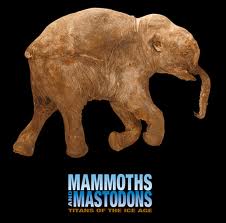 Here’s a great non-fiction book for enthusiasts of the pre-historic era. It begins with an important discovery by two boys just north of the Arctic Circle in 2007. Two boys found a frozen baby mammoth. The mammoth, later named Lyuba by scientists, died nearly 40,000 years before and was fully intact.
 phants and mammoths lived at the same time, 5 million years ago. One of the questions scientists are trying to answer is “Why didn’t elephants go extinct when mammoths went extinct?”





 Kids' Lit Corner